Sleep Science & Mattress Education
Natural Latex Mattresses: Understanding Bounce, Pressure Relief, and Breathability
Natural latex has a feel all its own: buoyant, responsive, and gently cushioning rather than slow to recover. But a material name alone cannot tell you whether a mattress will feel comfortable. Its construction, firmness, and fit with your sleep habits all matter.
Published October 21, 2026
Press your hand into a latex mattress and the surface tends to rise back promptly when you lift it. That quick recovery is part of the appeal: the bed feels lively under the body, offering cushioning without the pronounced sinking sensation associated with some slower-contouring materials. For people comparing mattress comfort, that response can be a welcome difference—or simply a matter of preference.
Natural latex mattresses are often discussed in terms of bounce, pressure relief, and breathability. Those qualities are connected to the material, but none is guaranteed by the word “latex” alone. Layer thickness, firmness, the way the latex is processed, the mattress cover, and the support system beneath it all influence the experience. Understanding those details can help you evaluate the feel more thoughtfully, without assuming that one mattress design suits everyone.
This guide explains how latex responds to movement, how it may cushion pressure-sensitive areas, and why some latex constructions encourage airflow. It also offers practical questions to consider when comparing options at home or in a showroom.
What is natural latex?
Natural latex is made from rubber tree sap, which is processed into foam for use in mattresses and other products. In a mattress, latex typically appears as one or more supportive or comfort layers. A mattress described as natural latex may contain latex foam alongside other materials, so it is useful to check the full construction rather than relying on the label alone.
Latex foam can be produced using different methods, commonly described as Dunlop and Talalay. These names refer to manufacturing processes, not a simple ranking of quality or comfort. A mattress may use one type throughout or combine layers. The resulting feel depends on the specific formulation and construction, including the thickness and firmness of each layer.
When reviewing material claims, look for clear information about which components are natural latex and whether other foams, fibers, or fabrics are included. Certifications and product documentation may help clarify material sourcing or processing, but they should be read according to their stated scope. A certificate for one component does not automatically describe every part of a finished mattress.
For sleepers, the practical question is less about a label in isolation and more about how the complete mattress feels and performs. Is the surface comfortable in your usual sleep position? Does it allow you to change positions easily? Does it provide enough cushioning at pressure points while keeping your body feeling supported?
Why latex feels buoyant and responsive
Latex is known for an elastic, springy response. When you shift your weight, the foam compresses and then rebounds relatively quickly. That can make the sleep surface feel buoyant: instead of feeling deeply held in a slow-moving impression, you may feel more as though you are resting on the mattress.
This response can be especially noticeable when turning over or moving from one position to another. Some sleepers appreciate that the surface does not seem to resist movement. Others prefer a more enveloping sensation and may find the springiness less relaxing. Neither reaction is a measure of whether the material is objectively better; it reflects how different people experience a mattress.
“Bounce” can also describe more than one sensation. A mattress may feel lively at the surface while still providing steady support underneath, or it may feel springy throughout. Layer arrangement and the support core help determine how the bed responds. A thin comfort layer over a firm base may feel quite different from a thicker, softer latex layer over a more yielding foundation.
For couples, responsiveness may be worth considering alongside motion transfer. A material’s bounce does not by itself tell you how much movement a partner will notice. The full mattress design, the movement involved, and individual sensitivity all play a part. If sharing a bed, try lying down together and changing positions rather than making a decision based on a description alone.
People who like to feel more lifted and free to move may find latex’s quick recovery appealing. Those who want a deeply cradled sensation may prefer another feel, or may want to compare latex mattresses with different comfort-layer thicknesses and firmness levels.
Pressure relief: cushioning without choosing by slogan
Pressure relief describes how a sleep surface cushions the body where it meets the mattress. Areas such as the shoulders and hips can experience more concentrated pressure, particularly when a person sleeps on their side. A suitable mattress allows enough surface give to accommodate body contours while offering support that helps keep the body in a comfortable position.
Latex can compress beneath heavier areas and distribute contact across a broader surface. Its response is often described as more buoyant than deeply conforming. That may create a balanced sensation for some sleepers: enough cushioning to soften contact, but not so much sinking that movement feels difficult. The result depends on the mattress’s firmness, the thickness of the latex layer, and the sleeper’s body shape and weight.
Firmness is not the same as support. A mattress can feel soft at the surface yet still provide a stable foundation, or feel firm without offering the right kind of contouring for a particular sleeper. When judging pressure relief, consider whether the bed cushions the places that tend to feel uncomfortable without leaving other parts of the body unsupported.
Sleep position offers a useful starting point, not a universal rule. Side sleepers often pay close attention to shoulder and hip cushioning because those areas meet the mattress more directly. Back sleepers may look for a surface that feels comfortable under the hips and shoulders while maintaining an even, supported sensation. Stomach sleepers may prefer a firmer-feeling surface that does not allow the midsection to sink more than feels comfortable. Individual preferences and body proportions vary, so these are considerations rather than prescriptions.
If you wake with discomfort, that does not automatically mean a mattress material is to blame. Many factors can affect how you feel, including sleep habits, health conditions, pillows, and the support surface beneath the mattress. Persistent pain or new symptoms are best discussed with a qualified health professional rather than treated as a mattress-selection problem alone.
Firmness, layering, and the feel of the whole mattress
Natural latex mattresses are not all equally firm. Some are designed to feel plush and yielding; others feel more substantial and supportive. The firmness of a layer and the way it is combined with other layers influence whether the mattress feels gently cushioned, resilient, or comparatively firm.
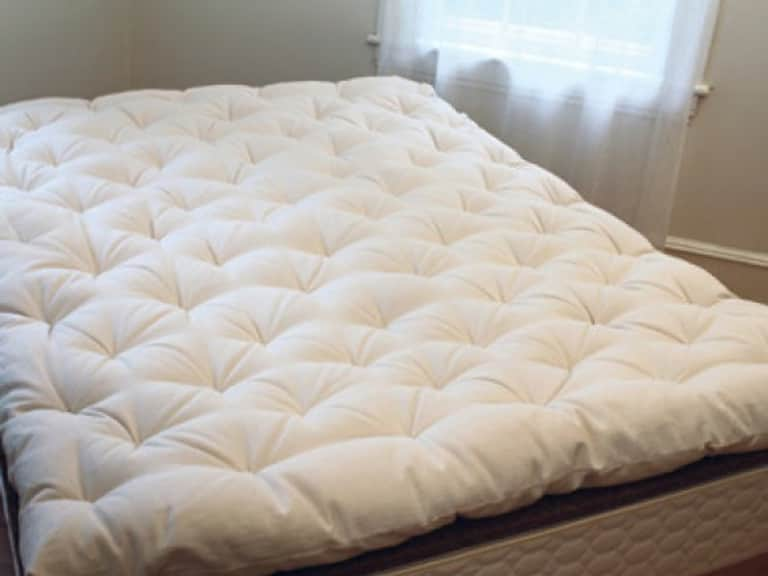
Layer thickness matters, too. A deeper comfort layer may let the body settle further into the surface, while a thinner layer over a firmer support core may create a more immediate, lifted feel. A mattress with several layers can have a different response from a single slab, even when both use latex. Cover fabric and quilting add another part of the surface sensation.
Firmness descriptions can be helpful for comparison, but they are not perfectly standardized across manufacturers. The same label may not feel identical from one mattress to another. Body weight, shape, and personal sensitivity also affect how firm a bed feels in practice. If possible, test the mattress in the position you usually sleep in and spend enough time on it to notice how your shoulders, hips, and lower back feel.
A clear product description should explain the materials and construction in understandable terms. Useful details include layer composition, layer thickness, firmness options, cover materials, and the type of foundation recommended. If important information is missing, asking for clarification can be more useful than trying to infer comfort from a broad marketing phrase.
Breathability and temperature comfort
Latex is often chosen by people interested in a more breathable mattress, but temperature comfort depends on the complete sleep system. Foam structure may allow air to move through or around a layer, and latex’s responsive feel may make it less enveloping than materials that let the body sink more deeply. Those features can affect how warm a bed feels, but they cannot guarantee that every sleeper will sleep cool.
Heat and moisture comfort also depend on the mattress cover, sheets, room temperature, humidity, pajamas, and personal physiology. A thick, closely quilted cover can change the feel of the surface. Bedding made from different fibers can also affect how warmth and moisture are managed. A breathable mattress may still feel warm if the bedroom is hot or the rest of the bedding traps heat.
When comparing options, look for specific construction details rather than promises of a perfect temperature. Ask what the cover is made from, how the layers are arranged, and whether the mattress includes materials that may affect airflow. If temperature is a major concern, consider your current sleep environment as well: bedroom ventilation, bedding weight, and seasonal changes can all be relevant.
Breathability is not the same as a clinical guarantee of cooler sleep. People vary in how warm they feel at night, and a mattress description cannot predict an individual response with certainty. A return or trial policy, where available, may give you a chance to assess comfort in your own room, but it is important to read its conditions before relying on it.
How to evaluate a natural latex mattress
Rather than asking whether latex is “the best” mattress material, focus on the experience you want and the evidence available about the mattress itself. A useful comparison considers comfort, support, materials, practical care, and the terms of purchase.
- Notice the response. Does the quick rebound feel comfortable when you move, or would you rather have a slower, more enveloping surface?
- Check pressure points. Lie in your normal sleep position and pay attention to whether your shoulders and hips feel cushioned without excessive sinking.
- Compare firmness carefully. Read how the manufacturer describes each option, while remembering that firmness labels are not universally consistent.
- Understand the layers. Confirm what the mattress contains, how thick its layers are, and whether it combines latex with other materials.
- Assess the cover and bedding. Fabric, quilting, sheets, and blankets all contribute to surface feel and temperature comfort.
- Review care instructions. Learn whether the cover is removable, how the mattress should be cleaned, and whether it needs a particular foundation.
- Read the fine print. Check delivery, warranty, return, and trial terms directly, including any fees or requirements.
If shopping in person, take time to settle into the bed rather than judging it with a quick press of the hand. If shopping online, look for detailed construction information and make sure you understand the trial and return conditions. A carefully worded description is helpful, but personal comfort is best evaluated through the actual sleep surface whenever possible.
Natural latex and other mattress materials
Comparing latex with other materials can make its distinctive feel easier to understand. Some memory foam surfaces respond more slowly and conform closely to the body. Latex generally recovers more quickly, which can feel more buoyant. Conventional polyfoam varies widely in density and response, so it should not be treated as a single, uniform category. Innerspring mattresses can have a more pronounced spring-led feel, though their comfort layers and construction make a substantial difference.
These broad distinctions are not substitutes for testing a particular mattress. Foam formulations differ, and a layered mattress may combine several materials to create a blended feel. A person who dislikes one latex mattress may respond differently to another with a different firmness or construction. Likewise, someone who enjoys a material in one design may not like every mattress made with it.
Material choice should also reflect personal needs beyond feel. People with known material sensitivities should review product details carefully and seek appropriate professional advice if they have concerns. “Natural” does not mean that every person will tolerate a product equally well, nor does it by itself explain the finished mattress’s full composition.
Common misconceptions about latex mattresses
- “Natural latex always feels soft.” Latex mattresses come in different firmnesses and constructions. The material name does not determine the complete feel.
- “A firmer mattress is automatically more supportive.” Firmness describes a sensation; support concerns how the mattress holds the body. They are related but not interchangeable.
- “Breathable means cool for everyone.” Airflow can contribute to comfort, but bedding, room conditions, and individual temperature sensitivity matter too.
- “Bounce means poor pressure relief.” A responsive surface can still cushion the body. Whether the balance works depends on the mattress design and the sleeper.
- “The material alone predicts durability.” Longevity depends on construction, use, care, and other factors. Check the maker’s stated warranty and care guidance rather than assuming a lifespan from the material name.
Good mattress decisions are rarely made from a single claim. A balanced assessment brings together the feel you prefer, your sleep position, construction details, and practical policies. That approach is more reliable than treating any one feature as a guarantee.
Frequently asked questions
Does a natural latex mattress feel bouncy?
Many latex mattresses have a noticeable, quick-recovering response. How pronounced it feels depends on the latex formulation, firmness, layer thickness, and the rest of the mattress. The sensation is often described as buoyant rather than deeply slow-moving.
Can latex provide pressure relief?
Latex layers can compress beneath the body and provide cushioning, but pressure relief varies by construction and by person. Consider your usual sleep position and whether the surface cushions your pressure-sensitive areas while still feeling supportive.
Are latex mattresses breathable?
Latex construction may allow airflow, and a less enveloping feel can suit some people who dislike sleeping deeply in a mattress. Temperature comfort also depends on the cover, sheets, room conditions, and individual preferences, so breathability should not be read as a promise that everyone will sleep cool.
How can I tell if latex is right for me?
Think about whether you enjoy a responsive surface, test how it feels in your usual sleep position, and compare the mattress’s firmness and layers. When testing is not possible before purchase, read the construction and trial terms carefully.
The bottom line
Natural latex mattresses stand out for their resilient, responsive feel. Depending on their construction, they can combine buoyant support with cushioning and may offer airflow characteristics that appeal to some sleepers. But the material does not make every mattress feel the same, and it cannot promise a perfect match for every body or bedroom.
Look beyond the label. Compare firmness, layer arrangement, cover materials, and care requirements, then consider how the mattress feels in your preferred sleep position. A good choice is not the one with the most impressive-sounding claim; it is the one whose response, pressure relief, and overall comfort suit your needs.